How to Find Mana Fixing in a New MTG Set

Use a repeatable search checklist to find every relevant fixer in a new Magic set, measure its availability and judge whether your Limited splash can actually work.

 Graham
Use a repeatable search checklist to find every relevant fixer in a new Magic set, measure its availability and judge whether your Limited splash can actually work.

A combo package becomes too large when its extra cards create more dead draws than useful assembly paths. Learn how to count line pieces, support, redundancy, tutors, and protection separately.

Average mana value is useful for quick comparisons, but a mana curve reveals the clusters, gaps, and expensive tail that determine how a deck actually develops.
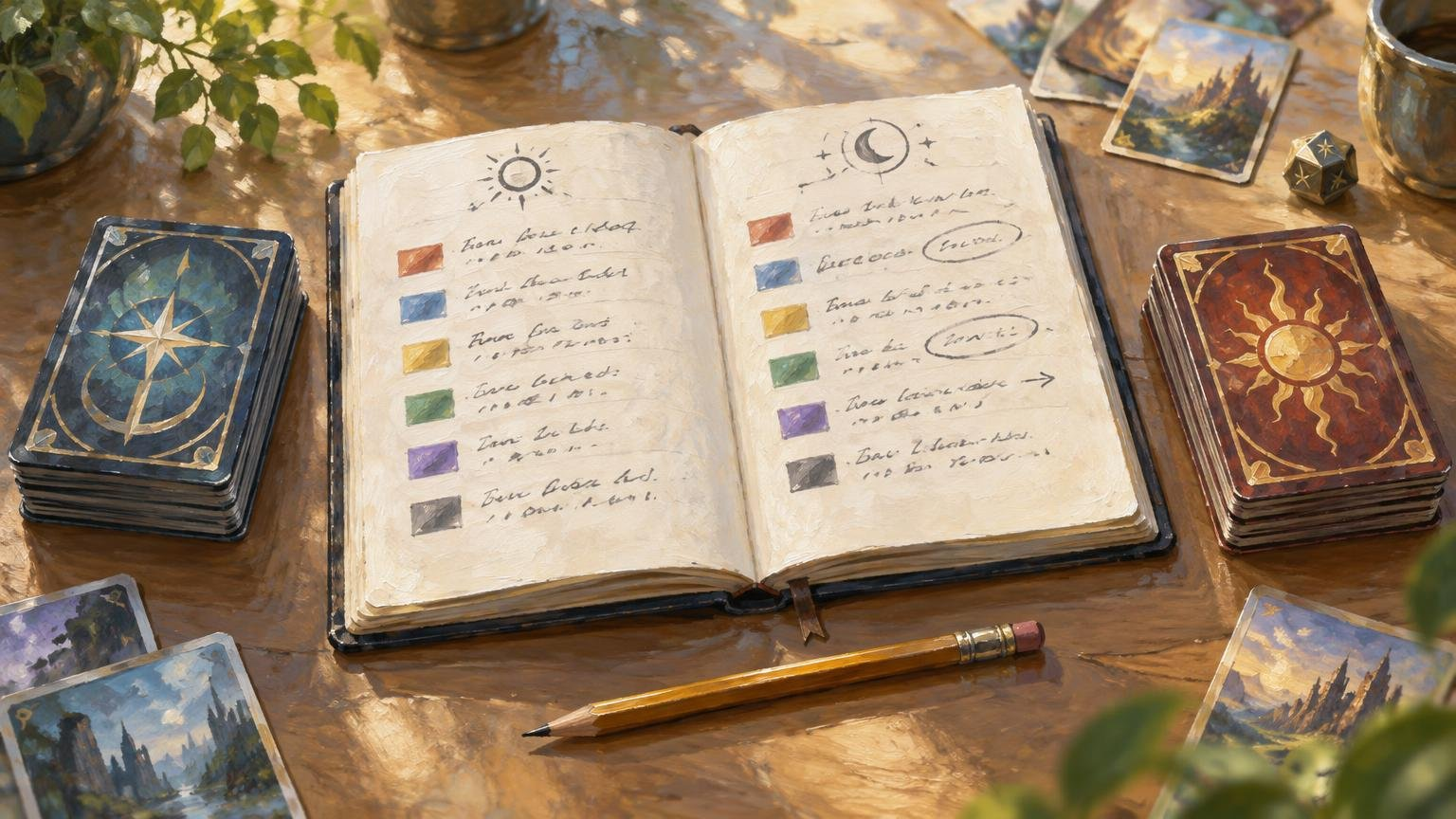
A repeatable playtest log for comparing MTG deck versions without reducing every change to a misleading win-loss record.
Raw land count does not show whether you can produce the right colors on time. Audit usable sources against each important spell’s cost and intended casting turn.

Signpost uncommons reveal a Limited set’s likely strategies, but they are clues rather than drafting instructions. Learn how to test each signpost against commons, payoffs, fixing, curve requirements, and the cards actually reaching you.
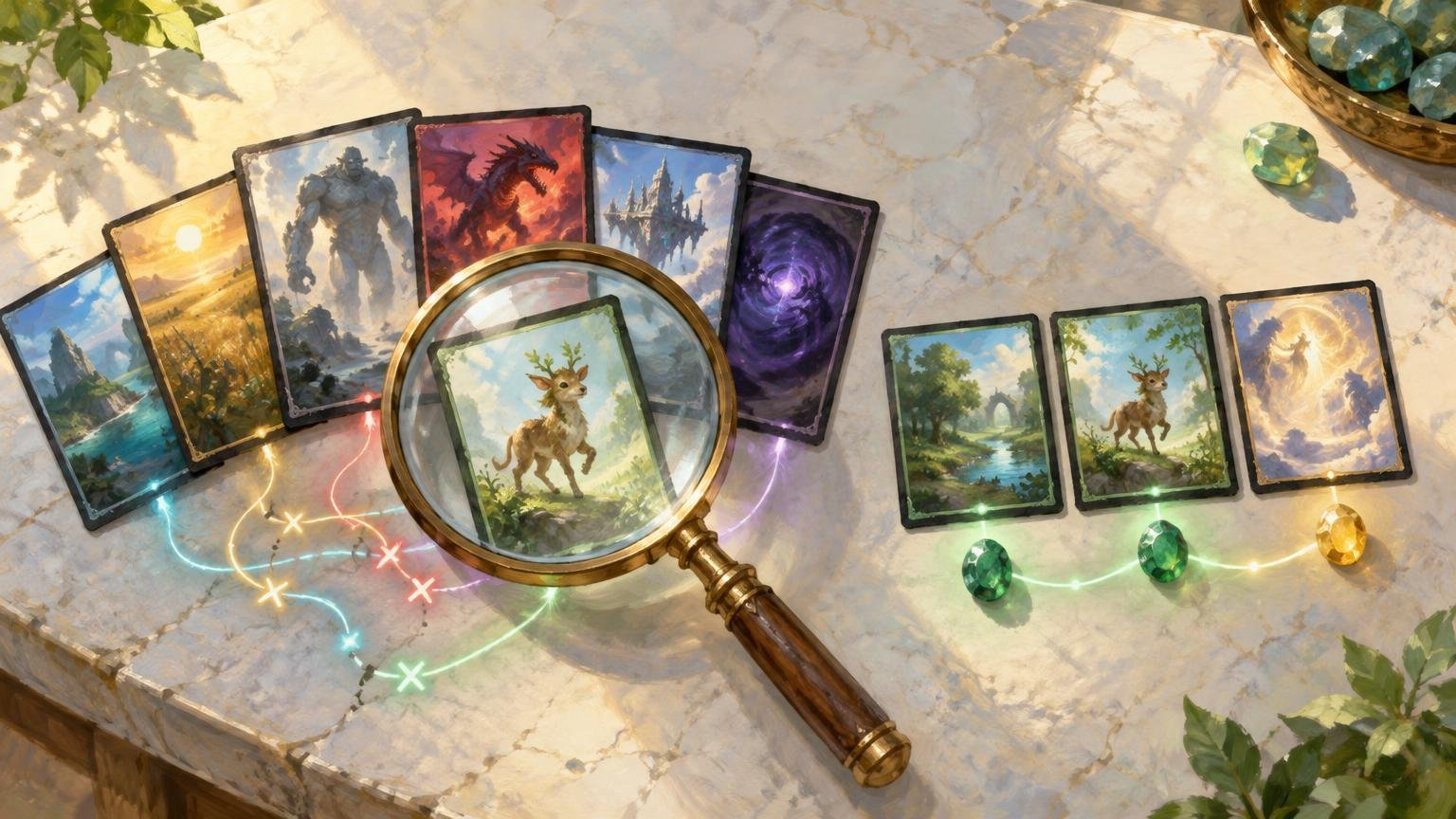
Recurring bad opening hands do not always mean a deck needs more lands. Use this testing workflow to isolate mana, curve, card-role, matchup, and keep-decision problems.
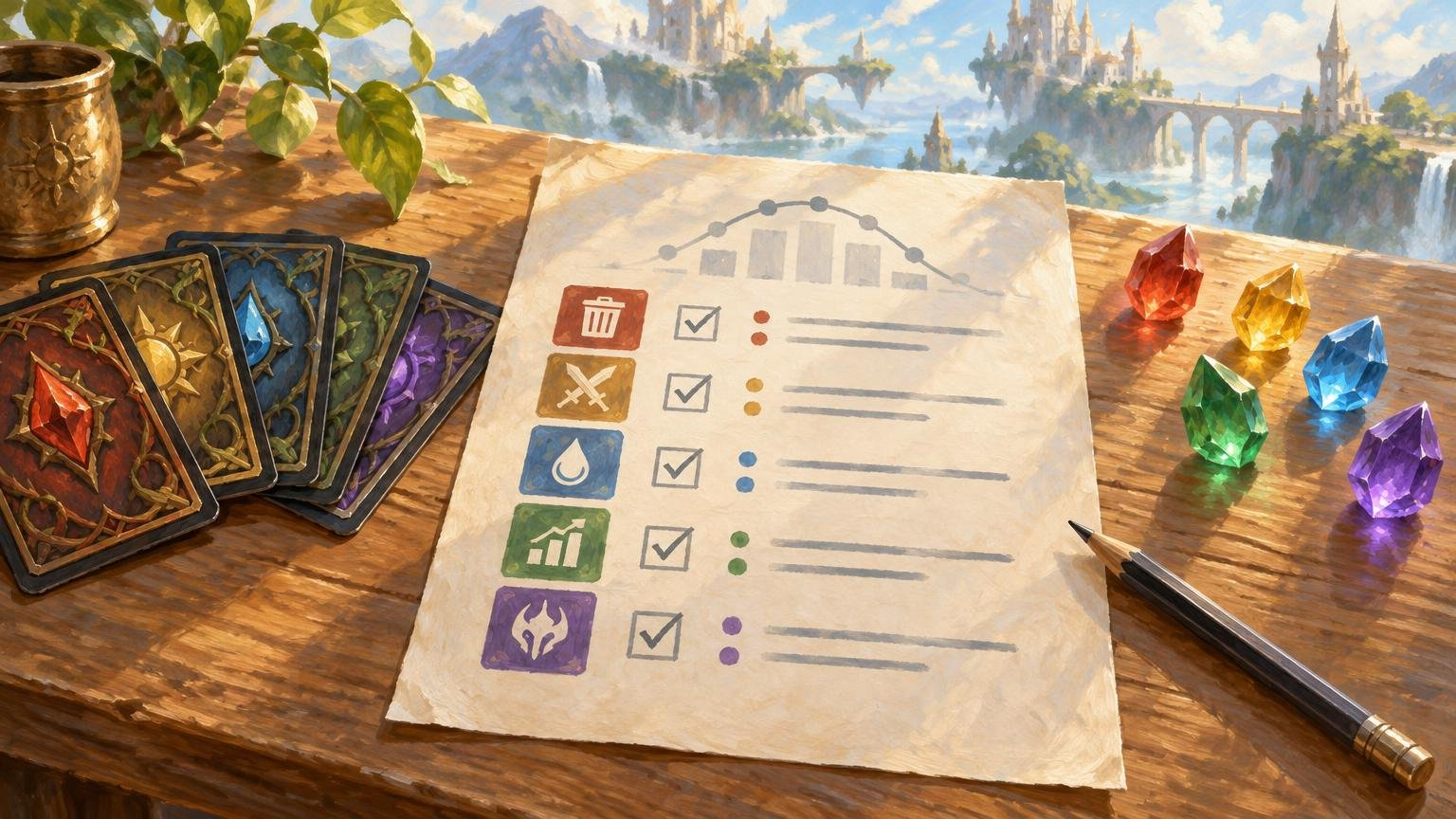
Build a compact, reusable reference for evaluating an unfamiliar Limited set without trying to memorize the entire card file.

Turn an unfamiliar MTG card list into a practical Draft map covering archetypes, commons, interaction, fixing, tricks, and questions to test.

Use card types to see your deck’s structure and functional tags to see what each card contributes. This workflow keeps multi-role cards visible without making category totals misleading.

A tier list gives you a baseline for card strength. A draft simulator teaches you when signals, synergy, curve, and deck needs should override that baseline.

Learn how to identify build-around uncommons, measure their common support, interpret Draft signals, and decide when to commit or pivot.

Learn how to scan an MTG decklist for hidden loops, verify that an alleged combo actually works, and decide whether to embrace, disclose, or remove it.

Card types show what your cards are. Functional deck categories show what they do, making it easier to find weak ramp, draw, removal, and win-condition packages.

Build better Magic decks with a repeatable loop for defining the plan, finding cards, checking the curve, testing hands, logging games, and revising deliberately.